

The Communication World Network (CWW), represented by the big language model, has achieved a leapfrog development in artificial intelligence technology. Its breakthrough progress in semantic understanding, logical reasoning, knowledge accumulation, and other aspects has laid an important technical foundation for the emergence of intelligent agents. This enables intelligent agents to acquire core capabilities that were previously unattainable by technology, and drives them from technological exploration to large-scale implementation, becoming a key hub for productivity carriers and cross domain technology integration in the digital economy era. The importance of intelligent agents is not only reflected in the reconstruction of the industrial value chain and the improvement of production efficiency, but also in their ability to break down the barriers between the digital world and the physical world, reshape the operation mode of key areas such as production manufacturing, intelligent services, and smart cities. Therefore, intelligent agents have become the core engine driving industry change and giving birth to new business models.
Currently, with the significant decrease in the cost of intelligent robots, industry-specific intelligent terminals, and other equipment, the market size of intelligent agents is showing explosive growth. As predicted by Huawei in “Intelligent World 2035”, the connected objects of communication networks will expand from 9 billion people to 900 billion intelligent agents in the next decade, which will accelerate the evolution of network form from “human-machine interconnection” to “machine machine interconnection”. In this context, the independent operation of a single intelligent agent is no longer sufficient to meet the needs of complex scenarios. Multi agent collaboration will become an inevitable direction to support future cross scenario and large-scale applications, and the depth and breadth of intelligent agent communication requirements will continue to expand.
The access and high-frequency interaction of massive intelligent agents pose unprecedented challenges to the existing network’s carrying mode, interaction mechanism, and service capabilities. Traditional network infrastructure is no longer able to adapt to new communication paradigms. As the core direction of the evolution of new digital infrastructure, cloud network integration has long been a consensus in the industry. Its core evolutionary logic clarifies the empowering path of AI to the cloud network technology system: from “AI driven cloud network integration” to “AI native cloud network integration”. Based on the concept of cloud network integration, future intelligent agents will no longer be “upper level components” running in the cloud or application layer, but “network native citizens” deeply coupled with “cloud network edge end”. They not only rely on the ubiquitous connectivity and communication capabilities provided by the network to achieve autonomous interaction and collaboration, but also use their own intelligence to feed back the network’s perception, scheduling, and optimization, achieving deep integration and two-way empowerment with the network.
The challenges brought by intelligent agent communication to existing networks
The existing network’s supply capacity mainly focuses on data transmission, connection establishment, and resource scheduling, making it difficult to adapt to the communication needs of massive intelligent agents. This supply-demand contradiction stems from a dual dimensional transformation: at the level of “quantitative change”, the large-scale deployment and collaboration of intelligent agents have led to exponential growth in the number of communication nodes, traffic, and request frequency, far exceeding the carrying threshold of existing networks; At the level of ‘qualitative change’, as’ native citizens of the internet ‘, intelligent agents are driving fundamental restructuring of communication entities, networking architectures, interaction methods, and communication paradigms.
The network “quantitative change” brought about by intelligent agent communication
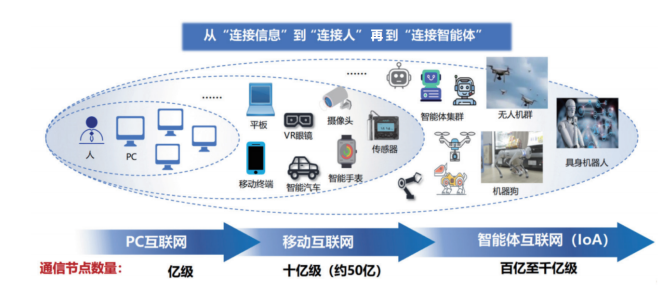
Figure 1 Evolution of Internet Mode
In the evolution process of “PC Internet – Mobile Internet – Agent Internet”, the network connection paradigm has achieved continuous upgrading from “connection information” to “connecting person”, and then to “connecting agent” (as shown in Figure 1). At the same time, the scale of communication nodes has gradually increased from the initial billion level to the current billion level (about 5 billion). For the upcoming stage of agent Internet, the industry has made clear research and judgment: in addition to Huawei’s prediction that the number of agents will increase a hundred times, Dr. Li Kaifu also proposed that “in the future, there may be 10 AI Agents per capita”. Based on comprehensive analysis, it can be conservatively estimated that the number of communication nodes in the future will increase by 10-100 times compared to the current level, and the total number of communication nodes in the network will reach billions or even billions.
In addition, there are significant differences in traffic patterns between intelligent agents and human users. The traffic of intelligent agents is continuous, and their perception and learning process will continuously generate traffic, while human users usually only generate traffic during interaction with the network or terminal; At the same time, inference traffic will also be generated between intelligent agents. Therefore, intelligent agents will bring a significant increase in overall network traffic. According to the data released by the Ministry of Industry and Information Technology, the per capita traffic in June 2025 is 20.75 GB; however, there is currently no official statistical data on the communication traffic of a single intelligent agent. Taking a typical intelligent car as an example, its daily uplink traffic exceeds 1000 GB. Based on this calculation, the proportion of network uplink traffic of intelligent agents in the future will be as high as 40% to 50% (it is expected that the proportion of uplink and downlink traffic in the future will be 1:1, and the total traffic will be twice that of uplink traffic).
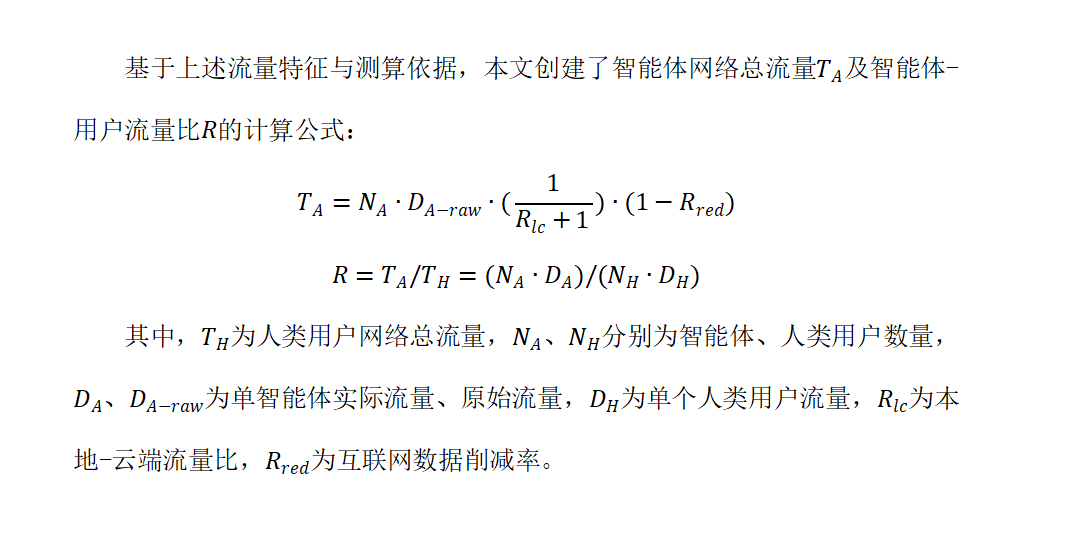
Calculated according to the local to Internet ratio of data traffic is 10:1, and the Internet data reduction rate is 80% after data compression algorithm optimization, data supervision and other factors, the total network traffic will be 60~600 times of the current in ten years. At present, the average annual growth rate of network traffic is about 16.4%. Based on this growth rate, the traffic will reach 4.6 times the current level in ten years. Based on this calculation, the network traffic brought by intelligent agents is expected to be more than 13 times the current traffic.
The network ‘qualitative change’ brought about by intelligent agent communication
As “native citizens of the network”, the upgrading of communication needs of intelligent agents will bring about a global “qualitative change” to the network, including communication subjects, networking architecture, interaction methods, and communication paradigms.
1. Communication subject level: from “human centered” to “human-machine collaborative symbiosis”. The communication subject of the traditional Internet is mainly human users and their operating terminals. The interaction logic revolves around “user request system response”. As an auxiliary tool for passive execution, terminals lack autonomous interaction capabilities. And intelligent agents have the ability to perceive, reason, and make autonomous decisions, and can actively initiate communication and participate in collaboration with minimal human intervention, becoming native communication subjects with independent identity identifiers in the network. It completely breaks the one-way dependence of traditional human-computer interaction by autonomously initiating, receiving, and processing interaction requests, and promotes the transformation of communication mode towards a new form of human-computer collaboration, symbiosis, and integration.
2. Network architecture level: from “centralized control” to “distributed autonomy”. Traditional networks are dominated by core nodes for decision-making and resource scheduling, with limited functionality of edge nodes. In the scenario of large-scale deployment and dynamic collaboration of intelligent agents, this architecture not only faces performance bottlenecks, but also carries the risk of single point failure, making it difficult to support flexible and efficient collaborative communication. In the communication scenario of intelligent agents, each node (intelligent agent) has autonomous perception and decision-making capabilities, and can dynamically form collaborative relationships and carry out division of labor and collaboration around specific tasks. This change directly promotes the network to break through the limitations of centralized architecture, forming a decentralized and self-organizing operating mode, and requires the network to strengthen its adaptability to dynamic collaborative scenarios to enhance the flexibility, robustness, and resource utilization efficiency of the system.
3. Interaction mode level: From “analog-to-digital conversion indirect interaction” to “digital digital direct interaction”. The traditional communication system is mainly designed for human-machine interaction, and signals need to be repeatedly converted between analog and digital forms to complete transmission. This not only adapts to the analog characteristics perceived by humans, but also forms a transmission logic that relies on conversion adaptation. As the main body of autonomous collaboration, intelligent agents have native digital perception and processing capabilities, and their interactions do not need to go through the “analog-to-digital” conversion process. They can directly transmit data and interact semantically through digital signals. This transformation not only eliminates signal loss and delay redundancy in the conversion process, but also puts forward new adaptation requirements for network transmission protocols: the protocol system design must break the traditional “conversion adaptation” logic and shift towards a lightweight, high capacity architecture that supports direct digital interaction between machines, to efficiently carry native digital signal transmission and semantic data interaction between intelligent agents, simplify redundant adaptation processes, ensure real-time and consistency of interaction, and provide underlying protocol support for intelligent agent collaboration.
4. Communication paradigm level: from “connecting data” to “transmitting intent”. With IP address and URL as the core, the traditional Internet focuses on establishing location connection between data and resources. And intelligent agent communication has introduced an intention driven mechanism based on semantic understanding, shifting communication logic from “connecting object positions” to “supporting task execution”, and upgrading network addressing from “position orientation” to “capability and intention orientation”. This upgrade requires the network to directly understand and match the collaborative needs of intelligent agents, upgrading from a “data transmission channel” to an “intent transmission and capability matching platform”, thus fully supporting complex intelligent agent collaboration scenarios.
Network architecture solution for bidirectional empowerment between intelligent agents and networks
The “quantitative changes” and “qualitative changes” caused by intelligent agent communication have pointed out the direction for the transformation of network architecture towards intelligent agent collaboration. The existing network system is built on traditional communication logic, and even after local optimization, it is difficult to adapt to new requirements such as autonomous collaboration and intent transmission of intelligent agents. It is urgent to carry out forward-looking reconstruction from the system level. This requires the industry to focus on the innovation of communication paradigms for large-scale distributed intelligent agents, build a bidirectional empowering network architecture that combines the capabilities of “connecting intelligent agents” and “endogenous intelligent agents”, provide underlying support for efficient collaboration among multiple intelligent agents, and ultimately form an orderly and collaborative intelligent agent collaboration ecosystem. Under this evolutionary logic, the network is no longer an external carrying environment for intelligent agents to operate, but a core component deeply integrated into their “perception decision collaboration” entire process. We propose the concept of ‘agent native network architecture’ in response to this.
Native network architecture of intelligent agents
The AI Agent Native Network has broken through the traditional positioning of “connecting information” in networks, and instead focuses on “connecting intelligent agents” as the core, which is a new network architecture paradigm for the collaborative needs of massive intelligent agents. Its essence is to deeply integrate the core characteristics of intelligent agents such as autonomous decision-making, collaborative learning, and dynamic response into the design source of network architecture, and build a low-level communication and coordination framework that supports intelligent agents’ autonomous discovery, secure communication, and efficient collaboration. Its core value lies in promoting the transformation of network functions from transmitting data information to empowering autonomous collaboration and intelligent emergence of intelligent agent groups. The concept of “native intelligent agents” has a dual connotation: firstly, intelligent agents are not just external access components of the network, but are inherent components of the network system, deeply integrated into the entire chain of “cloud network edge end”; Secondly, the network architecture has been designed with the needs of intelligent agents as the guiding principle, adapting to their core demands such as autonomous collaboration and intent transmission, and providing precise customized support services to achieve deep collaboration and symbiosis with intelligent agents.
The native network architecture of intelligent agents adopts a design paradigm of “horizontal functional layering+vertical endogenous capability penetration” (as shown in Figure 2), which provides scalable underlying support for the native interconnection and collaboration of large-scale and multi type intelligent agents through functional decoupling and capability internalization design. In the horizontal dimension, it is divided into infrastructure layer, interconnection communication layer, collaborative scheduling layer, and intent interaction layer according to functional responsibilities. Each level collaborates and links together to form a complete functional chain from low-level resource support to high-level intent interaction. In the vertical dimension, a unified design is carried out around the three types of system level endogenous capabilities of intelligence, trustworthiness, and green, so that relevant capabilities are integrated and deeply embedded into the operational mechanisms and architectural logic of each functional layer, achieving cross layer collaboration and full chain capability guarantee.
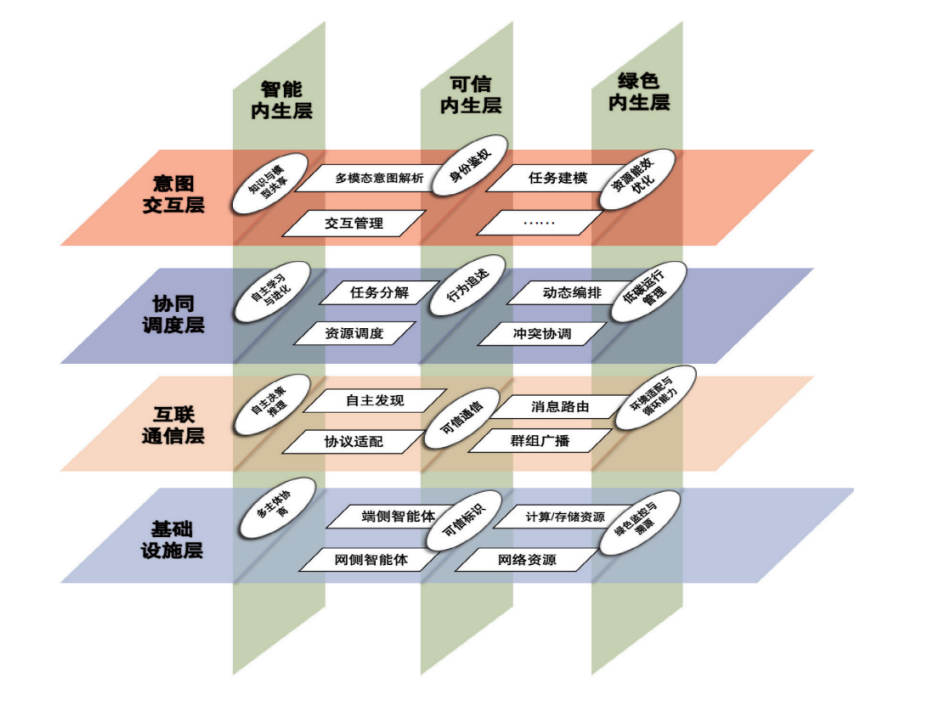
Figure 2: Native Network Architecture of Intelligent Agents
Three stages of evolution of native networks for intelligent agents
The evolution of the native network of intelligent agents follows the inherent laws of communication network technology iteration, and achieves a step-by-step upgrade through the evolution logic of “adaptation fusion reconstruction”. It can be divided into three major development stages: virtual hosting, hybrid collaboration, and native reconstruction, as shown in Figure 3.
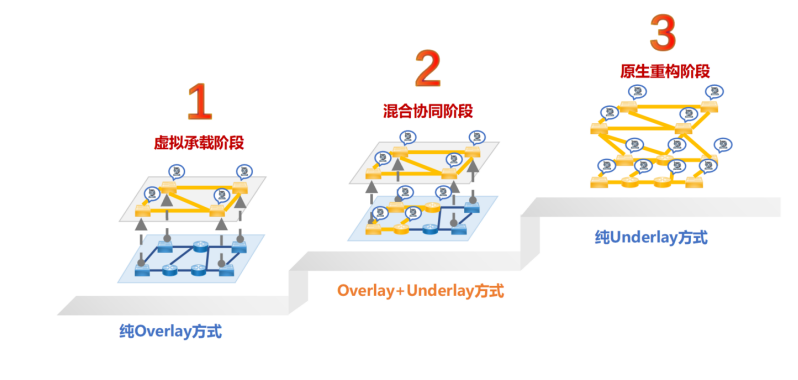
Figure 3 Development stages of native network for intelligent agents
1. Virtual hosting stage: the first stage of the native network of intelligent agents. In this stage, pure overlay is used to carry intelligent agent services, which does not change physical network devices and protocols. Intelligent agents need to adapt to network transmission characteristics through upper layer protocol and algorithm innovation, and cannot directly manipulate network devices or modify network protocols. The intelligent operation, maintenance, and management capabilities based on intelligent agents require the implementation of upper layer interfaces provided by the network.
2. Hybrid collaboration stage: the second stage of the native network of intelligent agents. In this stage, the “Overlay+Underlay” approach is adopted to carry out intelligent agent services, which means that some network nodes are transformed into underlying intelligent carriers, introducing network element intelligent agents as the native intelligent carriers of the network, and achieving collaborative operation between network devices and intelligent agents through translation mechanisms. Network element intelligent agents can collaborate with upper level intelligent agents for decision-making, but their functionality is limited by modified network nodes and cannot achieve intelligent collaboration across the entire network. For example, large networks with complex functions still use Overlay to carry intelligent agent services.
3. Native reconstruction stage: The third stage and final form of the agent’s native network. In this stage, pure Underlay is used to carry intelligent agent services, which means that the hardware and protocol stack are designed natively around the communication requirements of intelligent agents, achieving a deep reconstruction of “network elements are intelligent agents, and intelligent agents are network elements”. The intent expression and task requirements of the intelligent agent are encapsulated as network protocol primitives and directly embedded into the network transmission and control process; The operation status and resource information of the network are synchronized in real time to the intelligent decision-making unit through the native interface of the intelligent agent, and the intelligent agent leads the routing, scheduling, protection, and self-healing decision-making, forming an intelligent integrated closed-loop operation system.
Exploration of key technological directions for native networks of intelligent agents
Based on the evolution path of the native network of intelligent agents, the current focus is on laying out and tackling four key technological directions. Through breakthroughs in core technologies, a multi-dimensional basic support capability of scale interconnection, dynamic collaboration, and security and trustworthiness is formed, providing core guarantees for the cross domain, efficient, real-time collaboration and self governance operation of intelligent agents.
One is to study the key technologies for intelligent agent registration and discovery. Establish a unified identification registration standard and efficient capability discovery mechanism around a multidimensional identification system, intelligent agent registration mechanism, and capability discovery method, to achieve rapid authentication of intelligent agent identity, accurate matching of capabilities, and efficient completion of interaction.
The second is to study the key technologies for dynamic networking of intelligent agents. Tackle the flexible networking of multi-agent systems based on distributed subnets and the cloud network collaborative orchestration technology that integrates multiple elements, achieve task driven elastic networking and resource collaboration, achieve integrated cloud network collaboration, and meet the high dynamic and multi task collaboration requirements of intelligent agent clusters.
The third is to study the communication protocol of intelligent agents. Design and optimize around standardized interfaces and protocols, lightweight protocol stacks, and build an efficient and compatible intelligent agent communication protocol system to solve the problems of low cross layer communication efficiency and redundant signaling interaction caused by the lack of unified specifications between the network layer, transport layer, and application layer, and improve the communication efficiency and interoperability between heterogeneous intelligent agents.
The fourth is to study the secure communication mechanism of intelligent agents. A systematic design is carried out around communication isolation and traffic security protection, based on IPv6 virtual Ethernet (EVN6) technology to achieve logical isolation between intelligent agent communication networks and public networks, preventing risks such as unauthorized communication, horizontal diffusion, and malicious traffic attacks, providing independent, stable, and reliable security communication guarantees for large-scale multi-agent collaboration.
To effectively carry and implement the key technologies mentioned above, a functional carrying node system for intelligent agent communication can be constructed, with the intelligent agent gateway as the core carrying entity, forming a unified capability aggregation and scheduling entrance. By designing the corresponding functional architecture of the intelligent agent gateway and conducting prototype verification, it supports the interaction requirements of intelligent agents in various typical application scenarios, providing guarantees for the communication of the intelligent agent’s native network.
Conclusion
From the long-term evolution trend of cloud network integration, future networks not only need to carry connectivity and computing power requirements, but also have native support capabilities for intelligent agent behavior patterns, core functions, and collaborative relationships. The native network of intelligent agents abandons the design logic centered on a single application or platform, and regards intelligent agents as the “native participants” of the network. Through the perception, understanding, and empowerment of intelligent agent collaboration, it promotes the upgrade of the network from “passive support for intelligent agent business” to “deep integration with intelligent agents”. The specific implementation path, protocol system design, and feasibility in large-scale network environments of this transformation will be further validated in future research and experimental networks. Subsequent research can gradually advance in the areas of protocol design, prototype development, and communication mechanism verification for intelligent agent collaboration. Through experimentation and practice, the architecture concept can be implemented to provide more solid theoretical and technical support for the evolution of cloud network integration towards AI native.